
When the Hurdy Gurdy’s Done
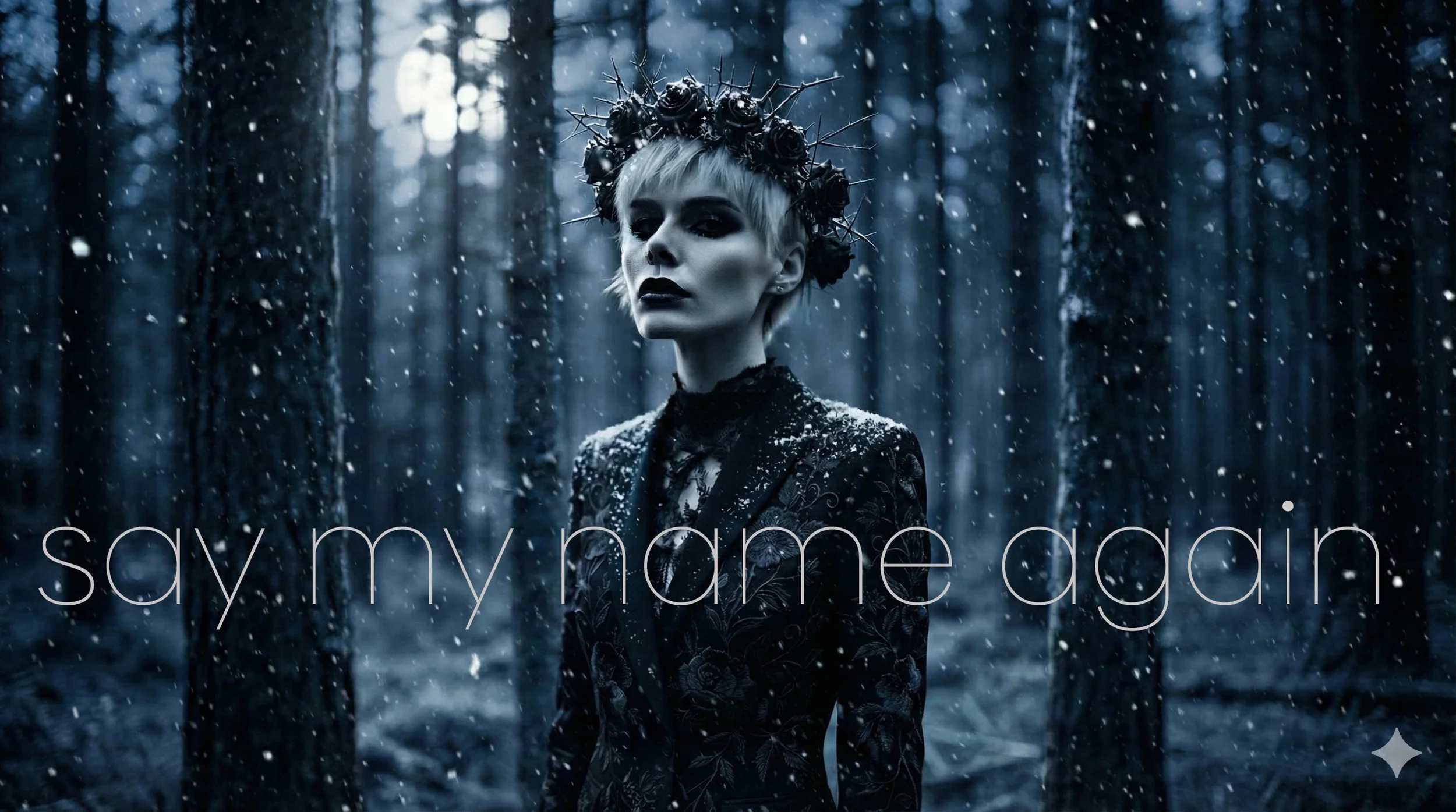
Ronja, darkStylus, and turning on the Droneda Engine
By Mujiki | Filed under: The Datura Tapes / Studio Logs
At The Datura Tapes, we don’t look for artists who "fit a genre." We look for artists who are the genre.
When we first encountered Ronja—a Professor of Nordic Occultism and a poet of stark, ashen verse from the subarctic town of Arjeplog—the connection was instantaneous. She didn’t come to us with a demo; she came to us with a philosophy. She wanted to know if the DarkArc was the right vault for her sonic ideas.
She asked “I know what a library of written poems looks like, but what would a library of audio expressions of those ideas look like.”
The Missing Frequency
“Ronja adds an otherworldly tension to the roster that we’ve been craving,” says Mujiki, Creative Director of the Tapes. “Most 'dark' music is a costume. With Ronja, the darkness is academic, ancestral, and deeply rooted in the soil of the North. Who knows what she means by oscillating occultism? We trust her though, after all she has a PHd in this stuff .”
The Production Challenge: Organic Electronica
For the in-house production team at darkStylus, Ronja’s arrival triggered a total overhaul of their workflow. They set out to create what they’ve termed "Organic Electronica"—a sound that breathes, bleeds, and decays like living tissue. Sounds hi-falutin, I just think they chained every plug-in and guitar pedal they had in a big long line. One thing is for sure though, it sounds like nothing else.
To achieve this, the team built a bespoke analog-to-electronic recording chain designed to mutate every signal that enters it. This isn't about clean "plugins"; it’s about sending a voice through a labyrinth of copper, valves, and intentional hardware failure. And then do it again with the result.
“The goal was to strip away the ‘perfect’ digital sheen,” a Dom from darkStylus operator notes. “We wanted the music to feel like it was being dug out of the permafrost.”
The Droneda Engine: A Machine That Dreams
The heart of the GLITCH/WITCH EP is the Droneda Engine—a semi-autonomous generative system the studio has been developing in secret. The Engine is unpredictable. It produces hours of sound that can never be replicated: sometimes a single, sinister note that vibrates the floorboards for ten minutes; other times, a surprisingly delicate, sparkling melody that vanishes as soon as it appears.
“It’s a ghost in the machine,” Ronja says, clearly enthralled by the process. “None of it can ever be recreated. It’s a captured moment of digital consciousness. I’m already planning to use these long, unrepeatable atmospheres as the foundation for epic-length poems in the future. It’s like having the wind of the North trapped in a wire.”
“Really it’s a way to make our music truly experimental, by leaving so much to chaos and chance, even we can’t make the same sound twice. There are no mistakes, because if we leave something in, it immediately becomes a choice. We believe this is truly experimental music, because it’s trial and error and never the same, each time we edit the track, it’s different.”
The Price of the Process
The sessions for the 3-track EP—consisting of "Say My Name Again," "No Cover No," and "Snow Static"—have been intense. The darkStylus team has a habit of disappearing into the "static bloom" for days at a time, fuelled by coffee, Florentine pastries and the Droneda’s low-frequency hum.
“I have to physically order them out into the daylight sometimes,” Mujiki laughs. “You can’t stay in the Arjeplog frequency forever. Taht way lies madness, and whilst I know they think that’s the point, you need fresh air and human conversation, otherwise, you start becoming part of the Engine. My job is to make sure they come back to the surface long enough to actually release the tapes.”