
Unflinching
Addiction in songwriting. Catharsis? Capitulation? Both?
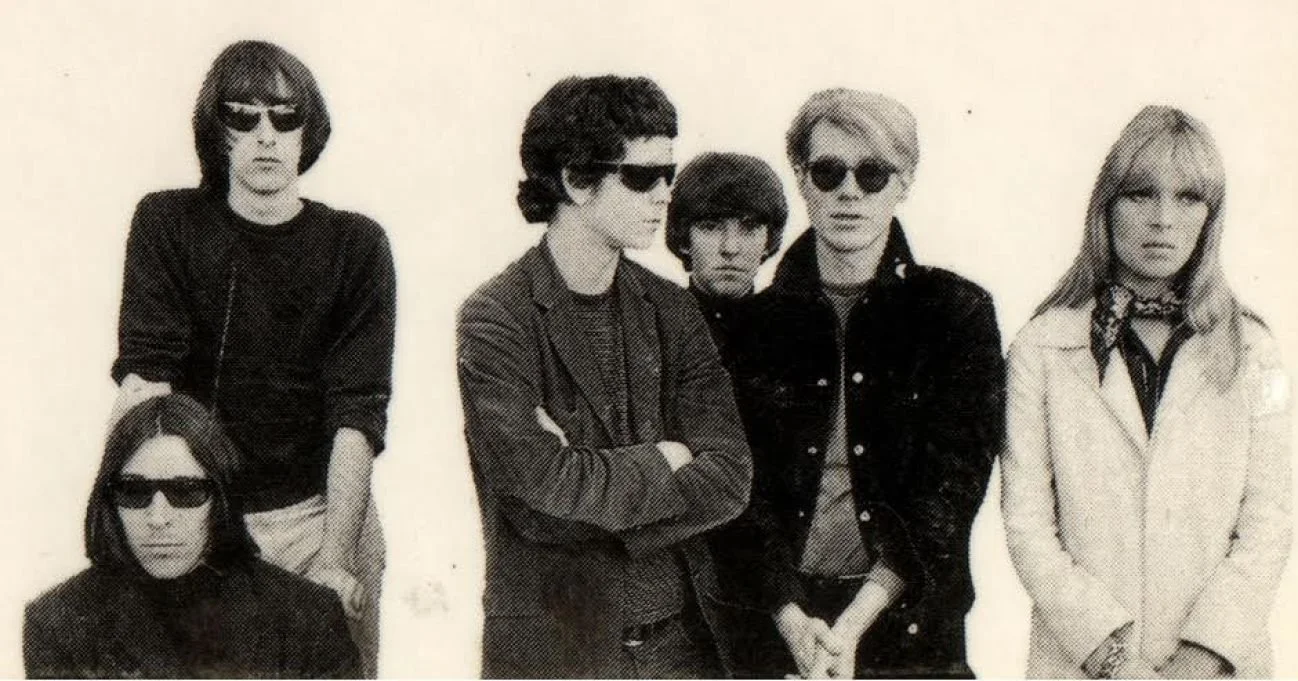
“It’s neither pro nor con. It’s just a report…” Lou Reed on the Velvet undergrounds’s song Heroin
“Your smoke stained ceiling, it becomes a spreading sky
And I really don’t mind at all, that I’m about to die”
Etta Vale, A Ceiling Was My Sky
Resignation, Reality, and the Archive
In the last week, over 1,100 listeners have found their way into the quiet, devastating atmosphere of Etta Vale’s “A Ceiling Was My Sky.” Without promotion or artifice, the track has struck a chord because it taps into a frequency of profound honesty: the acceptance of a death that arrives as the logical conclusion of one’s choices, and the quiet resignation that follows. It is not a song about a “high,” but a transmission about the finality found on a stranger’s kitchen floor.
This song belongs to a vital tradition of “documentary” songwriting. Addiction is a recurring feature of lyrics not because it is glamorous, but because it is a shared human experience that demands to be articulated for the sake of truth and catharsis. These artists don’t seek to romanticize the wreckage; they seek to map it so we might understand the geography of the edge. As Dave Gahan of Depeche Mode once put it: “There’s nothing Rock n’ Roll about dying on your bathroom floor.”
The Field Reporter
The clinical roots of this tradition lie in The Velvet Underground’s “Heroin.” Lou Reed famously described the track as a report rather than an endorsement: “I was trying to write the ultimate song about that feeling.” By stripping away the moralizing, the song leaves only the cold, accelerating pulse of the sound itself, documenting a world many prefer to keep in the shadows.
The Accuser
In “The Needle and the Damage Done,” Neil Young offers a brief, haunting eulogy for those who vanished into the habit. Reflecting on the loss of his friend Danny Whitten, Young noted, “I saw some of the best people I ever knew just disappear.” The song functions as a witness to the “damage done,” tracking the slow drain of a life’s worth with a stark, acoustic vulnerability. There is a bitterness here, too—the waste and stupidity of it all. It isn’t a totally fond remembrance.
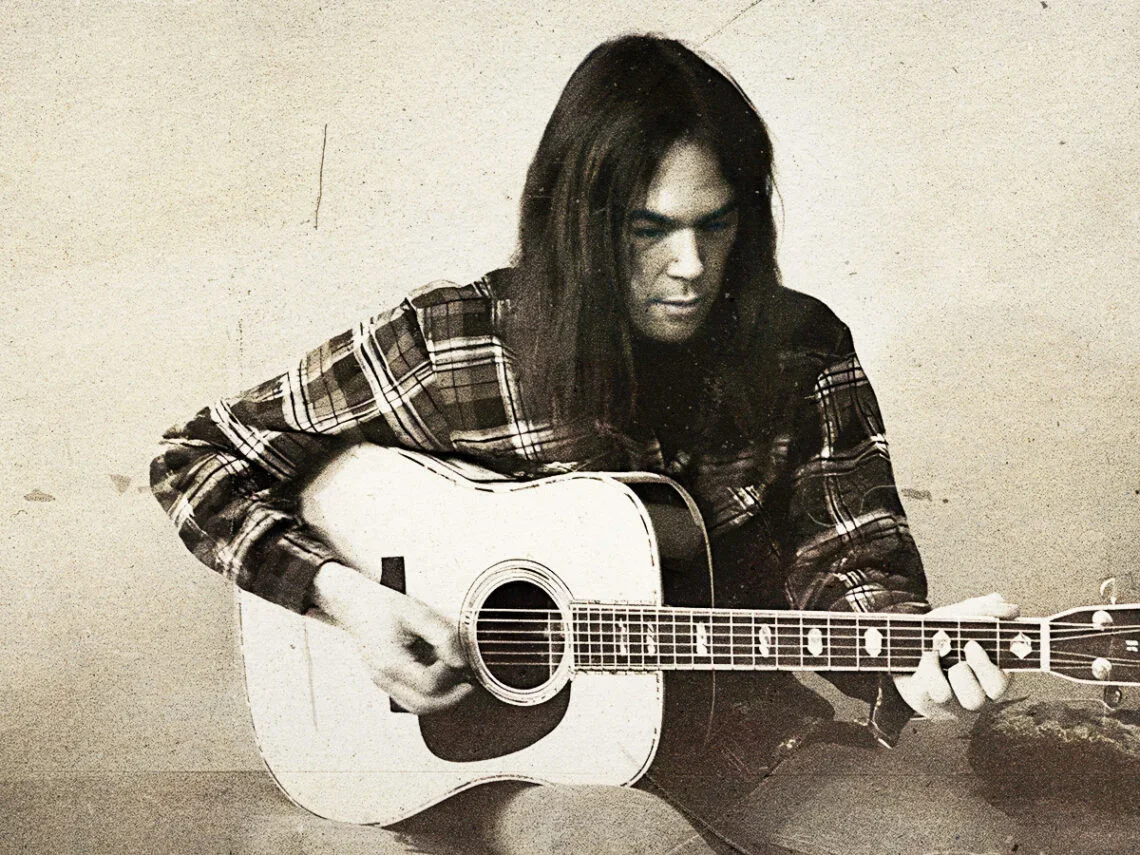
“I saw some of the best people I ever knew just disappear.”
Neil Young
The Memory Marker
Red Hot Chili Peppers’ “Under the Bridge” explores the profound loneliness addiction creates. Anthony Kiedis wrote the lyrics during a period of sobriety, reflecting on a time when the city of Los Angeles was his only friend: “The loneliness that I was feeling triggered memories... I was downtown with fucking gangsters shooting speedballs under a bridge.” It is a map of isolation—a marker that gives a time and place to a drifting existence.
The Trauma
John Prine’s “Sam Stone” shifts the lens to the collateral damage of trauma and the quiet decay of a home. Prine invented the character of Sam—a veteran returning from war with a “taste for smack”—to give weight to the devastating chorus: “There’s a hole in daddy’s arm where all the money goes.” In 1971, when PTSD and addiction were largely undiscussed, this was a harrowing memo from the forgotten.
The Controller
Even within the heavy-metal theater of Metallica’s “Master of Puppets,” the core is an investigation into the loss of agency. James Hetfield explained that the song deals with how drugs eventually switch the roles of control: “Instead of you controlling what you’re taking and doing, it’s drugs controlling you.” The relentless rhythm mirrors the sound of the cage being locked from the inside.
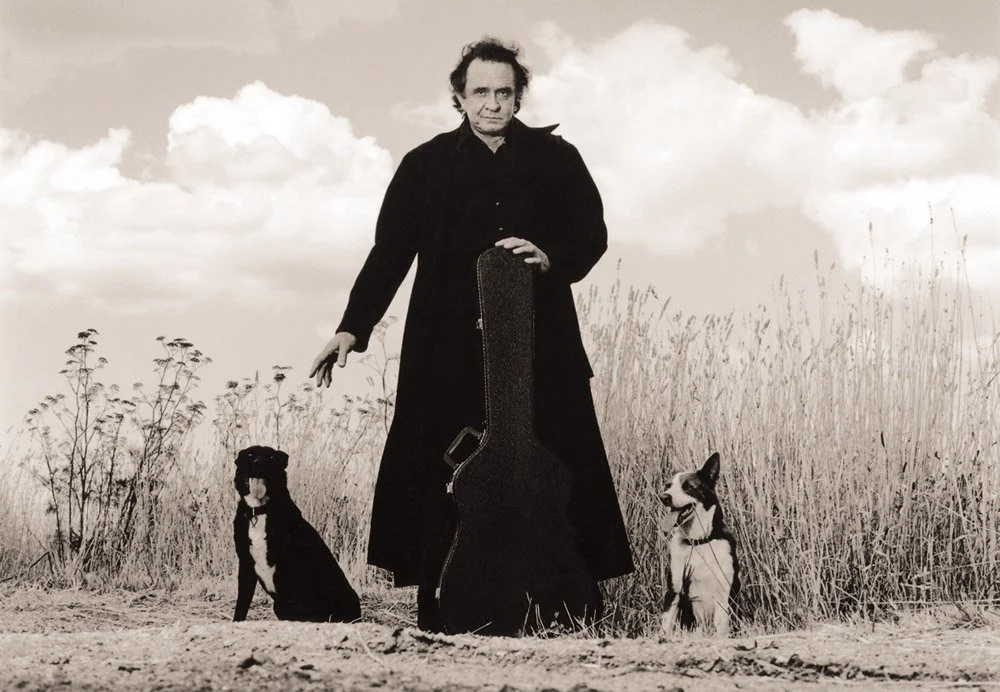
What have I become? My sweetest friend / Everyone I know, goes away, in the end
Johnny Cash, Hurt, American Recordings
The Apology
Nine Inch Nails’ “Hurt”—later redefined by Johnny Cash—functions as a final, naked inventory of self-harm and regret. Trent Reznor admitted that hearing Cash’s version was invasive because the song was so personal: “That song isn’t mine anymore... it became a life’s end.” Rick Rubin’s genius was to strip out everything but the Man in Black, creating an incredibly personal portrait of the inner self.
The Plea
NF’s “How Could You Leave Us” provides the raw, unvarnished scream of the witness left behind. Written about his mother’s overdose, the track is a heart-wrenching documentation of a child’s grief and anger. NF proves that the documentary style is as much for the survivors as it is for the participants.
The Secret
The La’s “There She Goes” occupies a stranger space: the “hidden” transmission. While its jangly melody suggests a breezy love song, the lyrics regarding the pulse in the vein suggest a deceptive high. How many breezy summers were soundtracked by those chords’ sinister secret?

The Departed
“There was that time when a smoke stained ceiling, became my sky
When it suddenly struck me, that all told it was OK to die”
Etta Vale, Your Ceiling Was My Sky
In “A Ceiling Was My Sky,” Etta captures the vertigo of the end—not as a failure, but as soaring resignation. When asked about the track, Etta said: “I wanted to capture the feel of the real world disappearing—as a huge overdose hits, when exhilaration turns to terror, and you discover that really, you are OK with it.
“And to wake up, to come back after making your peace with your end... that can feel more like tragedy than redemption.
“I also think there’s been a masculine sense of heroism about heroin—that it’s a medal of honour. A sign of how tough you are.
“It’s not. It’s a fuck-up, and girls can fuck up just as good as guys. Believe me, there’s nothing heroic about waking up pissing yourself on a stranger’s kitchen floor, not knowing where the fuck you are. They don’t give out medals for that.”
The End
Ultimately, this music persists because the experience it documents is part of our collective story. We don’t listen for the glamour; we listen for the catharsis of seeing the truth articulated without a filter.
Here at The Tapes, we love Etta because she is as unfiltered as they come. However harsh the truth, her voice is as pure and ringing as a spring morning bell. Our production team, darkStylus, describes producing her as “the absolute importance of keeping the feel of her songs as acoustic paintings.”
The Datura Tapes mission is “The truth. Forty-eight thousand times a second,” and it’s never truer than with Etta. We are so happy her first release is striking a chord; we’re mixing her second release as we speak. Stay tuned.
Love from me, Etta & DarkArc in Florence

Hear the full song on Soundcloud
Reading & Watching: Further Artifacts
Movies:
Trainspotting (1987)
Renton and the gang get up to all sorts, and as with many stories about drugs, it’s a lot of fun until it isn’t.
Requiem for a Dream (2000)
An intense, psychological look at the shattering effects of various addictions.
Drugstore Cowboy (1987)
Gus Van Sant’s funny, sad, unflinching look at the drifting life of a group of junkies as they criss cross the pharmacies of America.
Books:
The Body Keeps the Score by Bessel van der Kolk
Understanding the link between trauma and addiction.
The Urge by Carl Erik Fisher
A humane and illuminating history of addiction.
Junkie by William Burroughs
A defining work in describing the personal experience of addiction.
Wishful Drinking by Carrie Fisher
“If my life wasn’t funny it would just be true, and that is unacceptable.” Don’t roll your eyes at a celebrity memoir. Hilarious and hi-octane, this is every kind of a good read.
This is of course just scratching an infinite surface, we could discuss this all day, but these sprang to mind. No doubt you have your own totems on this subject. Let us know on the comments below.
A Note on this Frequency: If you or someone you know is struggling with the subjects discussed in this transmission, please know that you are not alone. There are voices waiting to listen and help you find a different sky. You can contact SAMHSA’s National Helpline at 1-800-662-HELP (4357) in the US, look up We Are With You in the UK, or search for your local support services.
There is no shame in seeking help, everyone needs a little sometimes, The Tapes have had their troubles too, help is always a lot closer than you think.