Losing the plot? The Pantser’s Confession
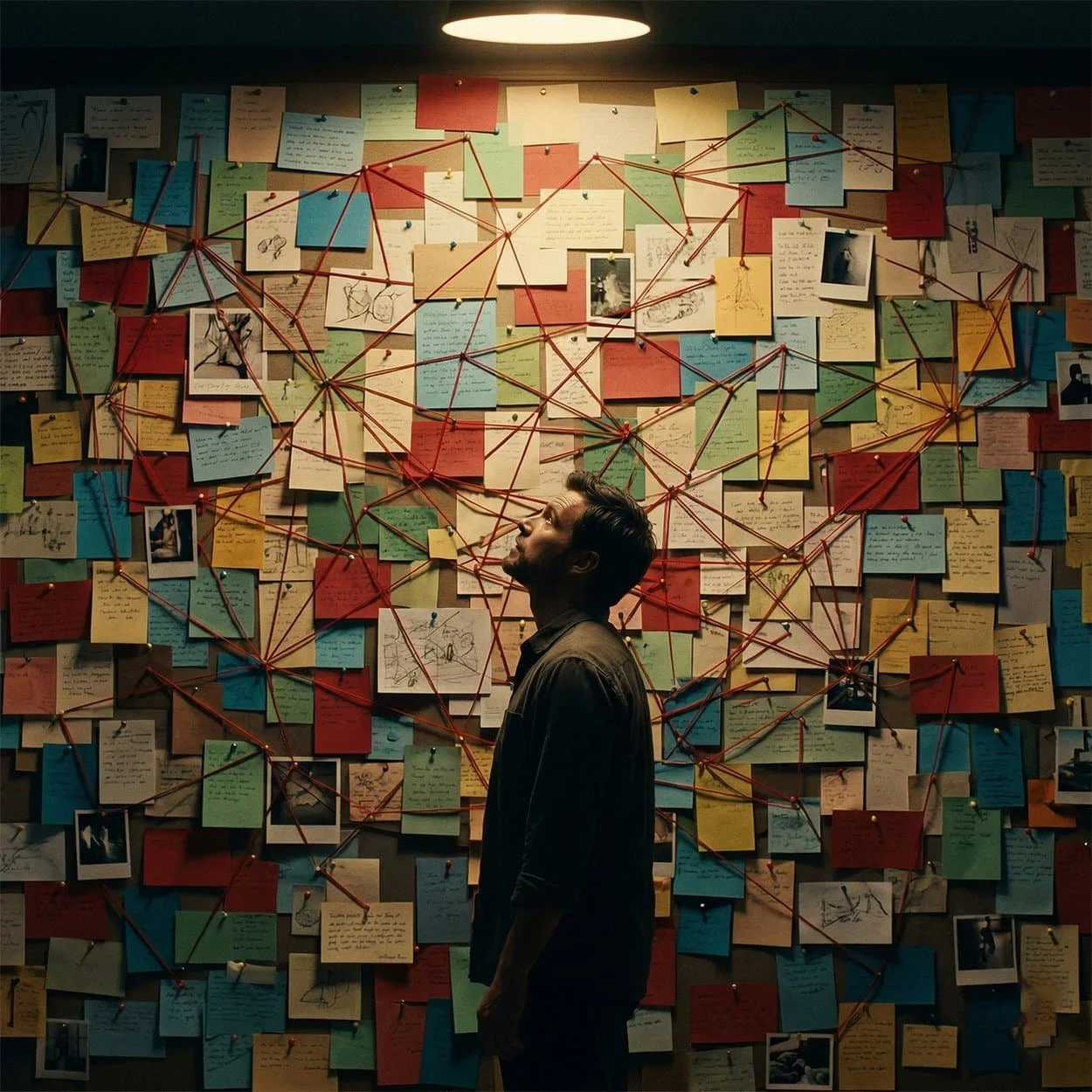
It Ain’t Me Babe…The organised and thought out world of the Plotter is something I simply cannot fathom
Why that Final 5% is Harder Than the Other 95.
There's nothing like going over an existing manuscript for finding out all the stuff you got wrong
Pantsers on Fire
I’m a Pantser. There, I’ve said it. I belong to one of the two types of writers identified by Stephen King, who, it’s probably safe to say, “knows these things.”
Around my desk, there are no notebooks. On my wall, there are no cards joined by red thread, no Rolodex of characters. There is only me and an open Scrivener document which may—or may not—have a few dusty Wikipedia pages tucked into the notes section. No preparation. I sit down, and off we go. Blank page? Pshaw!
“I’m a Pantser, there I’ve said it…”
I am the very opposite of my literary anti-matter: the Plotter. I lack their methodology, their cautious approach, and their mountains of captured ideas. It is no surprise, really; I’m just not built for the “Big Plan.”
At least, not in my fiction.
In my day jobs, I can be quite the strategist. When I’m writing for magazines like Nikon Europe, I plan everything. I consider the technical aspects, the narrative arc, and how to lead the reader through a story they will both enjoy and retain. In my copywriting gigs, it’s the same deal. I have to weave brands, keywords, and products into everything from short Instagram captions to industry white papers. I rely on the “Three Ps”: planning, planning, and more planning.
But my fiction? Not so much. And by “not so much,” I mean not at all.
To me, fiction feels like a thread to be pulled—my own private adventure. I am a reader as much as a writer, constantly asking: What’s next? What are they up to? What are they looking for? As a gamer—especially of the RPG variety—it feels like the map “unclouding” as you explore, unlocking skills and tasks as you go. I don’t want to know the whole world before I start. I want to discover it.
I am a classic Pantser, then. Or so I thought.
Well Begun Is Not Half Done
The reason for this confession? If you have been following the Datura Press blog (and why wouldn’t you?), you’ll know we recently dusted off an old manuscript, The Annotated Casebooks of Professor Manton Marble, that had mouldered for nearly two decades in a digital drawer.
It had been rejected back then, but with caveats that offered a flicker of hope. The feedback had mentioned things like “thrilling” and “very original, if over-complex.” I’ll take those! It seemed worth a revisit, particularly as it will form the backbone of our upcoming “Datura Dreadfuls” project.
The target was a competition for beginnings: a 5,000-word submission. Not a word more, and not much less. As I said, we went for it. But upon opening the file, I realised that “almost there” remains a very long way away.
Out of the Gates
A Pantser revisiting an old script is often horrified by their own opening chapters. While the Plotter sets off with reasonable confidence—knowing the characters, the endgame, and exactly who is going to be shot in Act Five with the gun introduced in Act One—the Pantser is usually just “making stuff up”.
My first chapters were fun, and the story’s central “device” was original, but the execution was all over the place. Because this competition required the reader to “get” the entire novel’s potential within those first 5,000 words, it became a relentless task to sharpen the introduction and the mechanics of the storytelling.
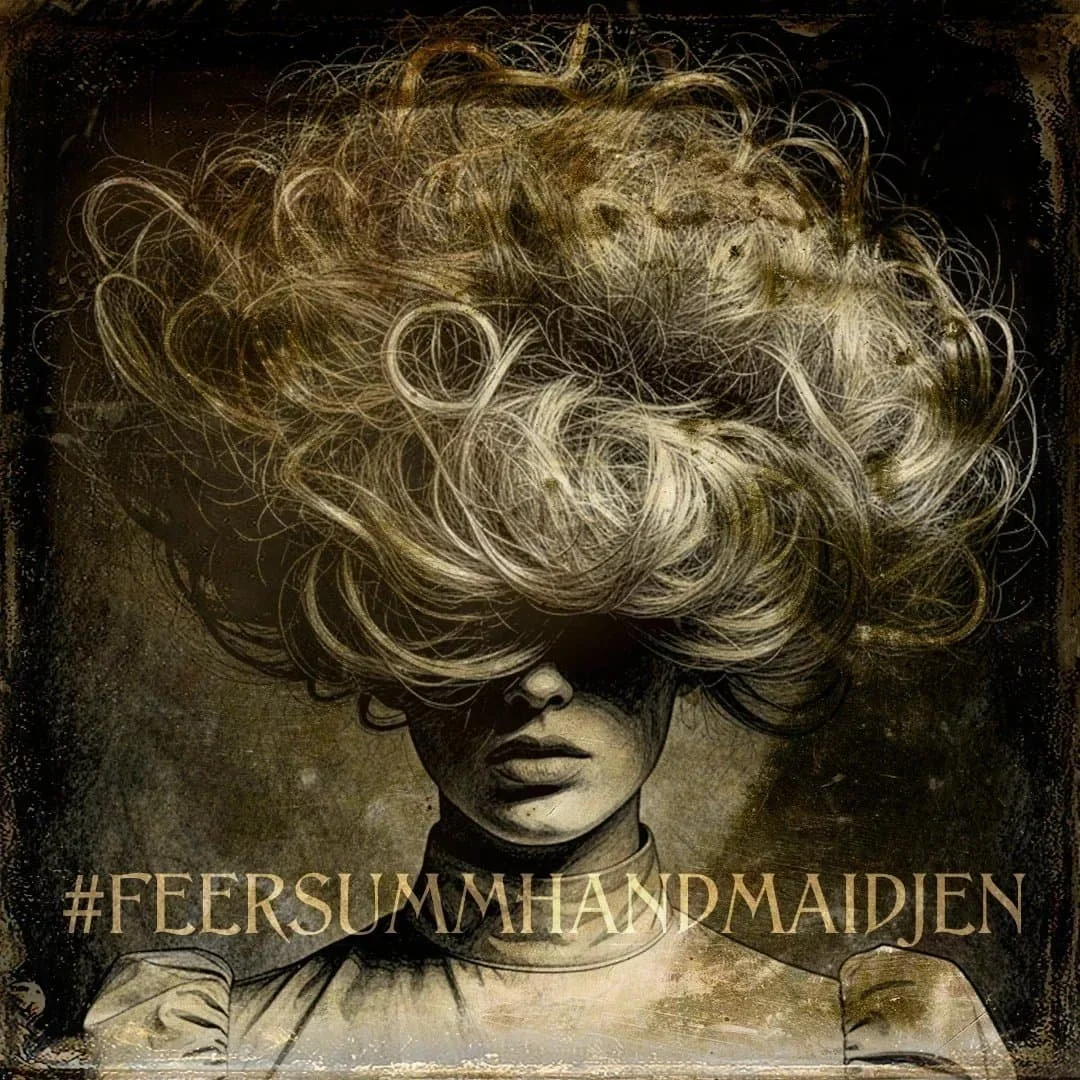
Daughter Mine from The Annotated Casebooks of Professor Manton Marble — I have a knack for conjuring characters, but they need work so they don’t sound like me putting on silly voices.
The “Sub’s Pen” and the Civil Servant
Mercifully, the original wasn’t a total shambles. I generally rewrite chapters twice, so it wasn’t a minefield of howlers, but it was still choked by passive verbs, weedy descriptions, and “marking time.” My editorial pen drew a line through a thousand words without breaking a sweat.
As a copywriter, I was taught that a paragraph should be a sentence, and a sentence should be three words—and if it’s three words, do you really need the other two? While I enjoy being let off the leash with fiction, it means I tend to “go on” a bit. It is remarkably hard to apply the same discipline to your own soul as you do to a paying gig. As my first editor used to say: “I could have written it shorter if I’d had more time.”
Then there is the matter of “His Master’s Voice.” I am fortunate (I think, anyway) to have a form of hyperphantasia, meaning I can instantly conjure vivid, cinematic scenes in my mind, hear dialogue and am able to play it backwards and forwards like a VCR (ask your parents, or maybe granparents). It gives me a head start on characters; they feel “living” from the off, because I can see them in the flesh and how they walk, talk and interact.
In our current project, Narcisa Before Narcisa, the characters are distinct to me: Fenrir, the “Giant Silver Silly” (a huge talking wolf with a sardonic tone); Seraphina, the impossibly wise Queen of the Forest; and Narcisa herself, a haughty, awkward blundering nincompoop who is also perhaps the most important who ever lived.
However, going back over the first chapters of my competition piece—Hamilton Earle, my lonesome civil servant that discovers a universe of supernatural conspiracy—it was apparent that while I could hear him, the reader could not. The original version felt like dictation, not narration. It took several passes to make his thoughts sound like the motivations of a real person.
Too Many Notes, Herr Mozart
Then came the pacing. This is where I truly stumbled. Pacing manifests in many forms: broken sentences that interrupt the rhythm, or long, convoluted phrasings that gets lost in their own maze. I found myself reading my own work and thinking, “Eh?”
“I found myself reading my own work and thinking, “Eh?”
As a Pantser, it was eye-opening to see how much I was assuming the reader already knew. The pruning helped, but there were so many roadblocks to the chapter’s rhythm.
All those knotty sentences, passive words, convoluted asides, all just got in the way of the pace. And pace is important in a thriller. It’s the difference between ‘un-put-downable’ and ‘maybe later’.
Don’t tell anyone this, but whilst I think Dan Brown is any good as a writer, but you can’t argue that his stuff rattles along at a ridiculous lick, so I shouldn’t be totally snooty about telling a ripping yarmn
Just Plain Wrong
Yes it was written with 2005’s version of Word, which did have a spell check, but it still took five or six passes to expunge the typos and the “wrong” words—the hears that should have been here’s.
My editor, a fount of wisdom, always told me: “Dom, never be the final read on your own work.” I’ve worked with some incredible sub-editors at places like The Sunday Times, and I’ve learned that I wouldn’t dare change a comma once they’ve okayed it (not just because they can be very scary people).
Sadly, until you turn pro, it’s down to you. How I dream of having an editor.
The Curse and the Cure
Sharpening a manuscript to be “competition-worthy” is basically, bloody hard work. That final 5% of shine is ruthless. It forces you to be hyper-critical, and it’s often disappointing to realise that things you once thought were “great” simply aren’t “all that” under scrutiny.
I realised I hadn’t been meeting the reader halfway. There was too much work required on their part to figure out the story. My characters also needed more help to live and breathe and do things that they would do, not just what the story required, and I needed to scrub out every trace of the trite and the trope with carbolic soap.
“My characters also needed more help to live and breathe and do things that they would do, not just what the story required
Did I succeed? Maybe not totally, but I know I put in the work. The curse of the Pantser is the tendency to shy away from the diligence needed to turn a decent idea into something sharp and focused. The reason that manuscript stayed in the digital dust for twenty years wasn’t just the rejections; it was my subconscious acknowledgment of the work involved.
It reminds me of when I decided to build guitars (as one does). I sourced great parts and interesting combinations. I wired them up, and they looked amazing, and they played… okay. The juice hadn’t been quite worth the squeeze, what a let down.
So, I packed them off to a proper luthier. When they came back, they were amazing. Whatever he had done for that final 5% had turned neat-looking instruments into my dream guitars. My reaction? “These are a lot better than my playing merits; I’d better get practicing.”
The final shine on the manuscript was a slog, not so much fun, certainly not compared to the freewheeling fun of that first draft, but the result? Totally worth it.
The while thing has made me lose my fear of the ‘boring’ stuff, and to really champion the story and it’s characters, and to really try to create something that other people will enjoy, this no longer lives as a movie in my head I’ve tried to describe, it’s a real thing, in and of itself, 1005 existing on paper (or more accurately a formatted PDF, at least for now)
So, I ask you: Pantser or Plotter?
What is getting in the way of finishing that damn book?
What do you put off doing in your first few drafts? How do you know if your eye is too critical or too forgiving? Do feel free to share in the comments below.